
Beneath the heart of modern Mexico City lies the ghost of an empire—its canals buried, its temples shattered, yet its legends very much alive. Long before skyscrapers and traffic-choked avenues, this was a shimmering island city built on a lake, laced with waterways and crowned with towering pyramids. Many travelers sense that the old capital has never truly vanished; it lingers in the shadows, in the stories of restless spirits, and in the strange encounters reported after dark. The following locations, tied to that ancient metropolis, are believed to be especially charged with mystery and eerie energy.
Today, those who explore these places step into a layered landscape where time folds in on itself. Cracks in the pavement reveal stone foundations of ceremonial platforms; construction projects uncover offerings, bones, and idols that haven’t seen the sun for centuries. Locals, night-shift workers, and even police officers quietly swap tales of unexplained footsteps, disembodied chants, and shimmering apparitions along once-sacred routes. For curious visitors, history buffs, and paranormal enthusiasts, these stories offer a chilling way to connect with the echoes of a vanished world.
As you read about these sites and plan your own urban explorations, you might also be juggling travel budgets, tour bookings, or creative projects that demand organized records and receipts. If you need a simple way to create clean, professional invoices from anywhere—without installing complicated software—consider using the free pdf invoice generator so you can keep your paperwork as precise as the stonework that once lined these ancient canals.
1. The Temple Precinct Under the Historic Center
At the core of the old island city stood a monumental ceremonial precinct, a dense cluster of temples, platforms, and shrines. Much of it lies beneath the streets around the modern main square, where traffic and commerce hide what was once the spiritual engine of the metropolis. Archaeologists have uncovered layers of offerings—skulls, obsidian blades, ceremonial vessels—that hint at rituals meant to bridge the worlds of the living and the dead.
Security guards and maintenance workers claim that, late at night when the crowds fade, the air takes on a heavy stillness. There are reports of distant drums that seem to resonate from underground, soft chanting in an unknown tongue, and fleeting figures in feathered headdresses vanishing behind columns that no longer exist. Some visitors describe a sudden and overwhelming sadness, as though they’ve stepped into a lingering memory of ceremonies held under torchlight and moonlit skies.
2. The Subterranean Remains Beneath Religious Buildings
When the colonial city was built, imposing stone churches rose directly over the sacred spaces of the older capital. Beneath some of these buildings, excavations have revealed fragments of staircases, altars, and carved bas-reliefs. In a few locations, glass panels and side chapels grant brief glimpses into these buried foundations, where centuries-old walls cling to the moisture and darkness below.
Clergy, caretakers, and visitors alike report unsettling sensations in these undercrofts: sudden cold drafts with no apparent source, the sound of bare feet slapping stone, and murmured prayers that echo from empty corridors. Candles flicker violently without a breeze, and tools left in one corner are sometimes found carefully repositioned, as if unseen hands were continuing a ritual long after the official faith changed.
3. The Old Causeways Crossing the Former Lake
The ancient city was connected to the mainland by broad causeways that cut across the shallow waters of the lake. These stone roads functioned as lifelines for traders, pilgrims, and warriors. Travelers once walked between water and sky, the city gradually rising like a mirage in the distance. While the lake has largely vanished, the routes of these causeways now correspond to busy avenues and urban corridors.
Nighttime drivers along these streets sometimes speak of hearing the gentle lap of water where only asphalt lies, or of glimpsing shimmering reflections that do not match the modern skyline. A particularly common story describes lone pedestrians in out-of-time garments—cotton cloaks, sandals, hair bound with simple cords—who appear on the roadside and fade away when approached. These specters seem to be forever en route, unable to complete their journey to a city that no longer floats on the lake.
4. The Canals and Island Gardens at the City’s Edge
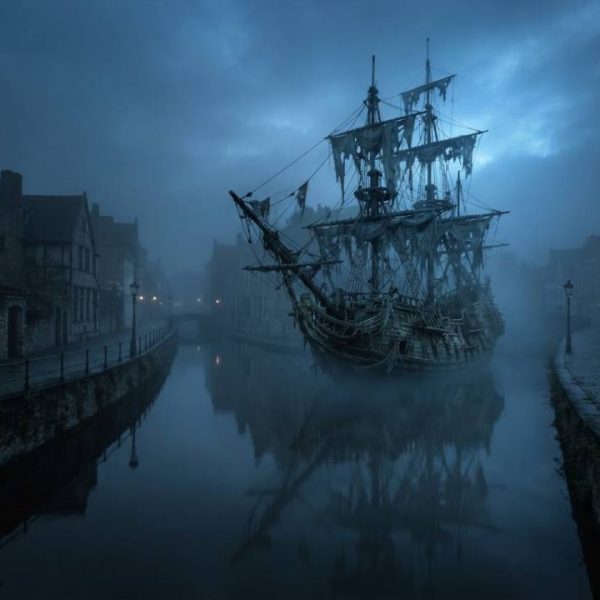
Remnants of the old lake system survive today as a network of canals and artificial islands at the outskirts of the metropolis. These waterways, edged with reeds and low-hanging trees, echo the environment of the ancient capital, where small boats glided between fields of flowers, herbs, and vegetables. The fog that settles over these channels at dawn and dusk can feel like a veil between ages.
Boatmen and residents tell of ghostly barges that drift silently against the current, moving with no visible rower. Strange lights are sometimes seen weaving among the reeds, too pale and cold to be lanterns. Whispered voices float across the water at hours when no tours are running, and the sudden splash of something heavy disturbs the stillness—though nothing surfaces. Some locals insist that these are the echoes of offerings once cast into the waters to appease the unseen powers that governed rain, fertility, and fate.
5. Residential Ruins Discovered Beneath Modern Homes
Beyond the monumental core, the ancient capital was a patchwork of neighborhoods, each with its own shrines, courtyards, and modest homes. Today, homeowners and builders periodically discover remnants of these domestic spaces: stone floors, hearths, fragments of pottery, and drainage channels. These finds are often recorded and then carefully integrated into modern structures, creating layers where families sleep above the ghost of earlier households.
Occupants of such properties sometimes describe strange domestic hauntings—soft weeping in the night, the sound of grinding stone as if someone were preparing food, or the faint patter of children running across a floor that no longer exists. Objects disappear and reappear in odd places; pets stare intently at bare walls, ears raised. These experiences give rise to the belief that the everyday lives, joys, and griefs of the ancient inhabitants have not completely faded, persisting as imprints on the very foundations of the city.
6. Market Squares Where Trade and Sacrifice Intertwined
The bustling markets of the old metropolis were more than commercial hubs; they were social and spiritual spaces, threaded by processions and watched over by shrines. Traders brought goods from distant lands, while ritual specialists moved among the stalls, offering blessings, divinations, and cures. The boundary between daily commerce and ceremonial obligation was thin and constantly crossed.
In the present-day plazas that roughly follow these old market grounds, vendors and late-night workers recount stories of odd acoustics: the clang of bells that no one can locate, the murmur of crowds speaking in a language no passerby recognizes. Sometimes, after storms, the scent of copal incense is said to cling to the air, even when no nearby ceremony has taken place. Those who are particularly sensitive describe seeing overlapping scenes—modern life and a ghostly marketplace—coexisting for a brief, unnerving instant.
Walking Between Worlds: Practical Tips and Final Thoughts
Exploring these locations is less about chasing jump scares and more about listening—to the city, to its layered history, and to the stories preserved by local communities. If you visit, move slowly, respect religious and cultural spaces, and consider joining knowledgeable guides who can connect oral tradition with archaeological evidence. Many of the most compelling accounts come not from sensational tales, but from quiet, matter-of-fact testimonies offered by people who live and work amid these remnants every day.
The capital that once rose from the lake may be gone in a physical sense, but its presence remains etched into foundations, street plans, and countless legends. Each haunted site serves as a portal into that submerged past, reminding visitors that cities are built not only of stone and steel, but also of memory. When the sun sets and the traffic noise dips, it is easier to feel those older currents stirring beneath the pavement, as if the ancient metropolis were still breathing just below the surface, waiting for attentive souls to notice.